


There are many considerations when designing and manufacturing quality power supplies that achieve impressive performance and reliability in all conditions.
Derating is one of these processes that can improve the performance of a power supply. Power derating is a protective measure for supplies that must operate consistently at high temperatures, high altitudes, or various mounting orientations.
Power supply manufacturers typically list performance characteristics that should be achieved in controlled conditions. Taking derating into account can help you make better-informed decisions when purchasing power supplies.
This paper explains in detail how derating is used in power supplies, the various types of derating, and how it affects power supply design and application.
What is Derating?
Derating is when a power supply, electrical system, or component is operated below its normal limit. This is often done to ensure reliability and safety when the power supply is in use, by controlling thermal conditions and input voltage.
While many power supply components operate under thermal stress, prolonged excessive temperatures can cause damage over time. This leads to unusual behavior and potential failures in power supplies and end systems. Derating can help to avoid this and act as a way to maintain power supply systems.
See below an example of the derating specification curve for the industrial grade WMIPU10 series AC DC power supply. Consumer-grade power supplies will experience drops in output power at lower temperature ranges.
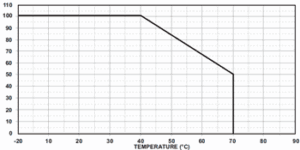
Figure 1. WMIPU10 Derating Curve
Derating graphs like this represent the maximum output power you can expect to get in a certain ambient or case temperature. It is not a good measure of how life of a power supply or converter can be increased.
In comparison, an efficiency curve can be used to see how efficient a supply will be at different input loads.
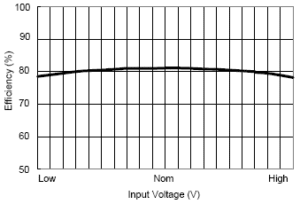
Figure 2. LAN K Series Efficiency Curve
Though it may seem like using a supply at a lower power will extend its life, it is actually far less efficient at lower power levels. It is optimal to design for the majority of use, while using a custom power supply with capability of handling overload spikes is overall the best choice.
Types of Derating
Temperature derating
This is the most common form of derating, as power supply components often generate heat during operation. Based on the ambient temperature, limits are placed on operating temperatures to maximize power output. You may notice that the operational temperature range of Wall Industries’ products is often smaller than the storage temperature range. In most cases, this will be due to derating to protect systems while they are in use.
Input voltage derating
Input voltage is another factor which can affect the output of power supplies. Electrical products should be able to provide their full power across their entire input range. However, there can be cases where the applied voltage must be derated to meet system requirements. Unequal input voltages can be a major cause of faults in end user systems, which voltage derating helps to avoid.
Altitude derating
Although relatively uncommon in practice, derating can be necessary due to the effects of altitude on air-cooled power supplies. This is because low-pressure and high-altitude conditions diminish the ability of the air to carry away heat.
The Importance of Derating in Power Supply Design
Derating is an important consideration when choosing an AC DC power supply that is well-suited to your application. The benefits of power supply derating include the following:
- Improved efficiency – the primary purpose of derating is to establish the optimal operating range of a power supply. Using power supplies according to derating specifications helps ensure you’re getting the maximum output available. If you’re struggling with power factor correction, it’s probably worth investigating forms of derating.
- Lower maintenance costs – derating power supplies can be seen as a form of preventative maintenance, reducing the stress placed on key system components and lowering the risk of breakdown.
- Meet industry demands – derating reductions will depend on the power supply and the ambient conditions. Derating testing is, therefore, essential when using new power supplies or introducing power supplies to new environments. For instance, derating is a major consideration for telecommunications power supplies due to limited airflow and high ambient temperatures.

- Save on material costs – manufacturers can manage thermal energy loss through heat sinks, conduction cooling, and other power supply features. Derating serves as a way to protect heat-sensitive components whilst also ensuring a compact design.
What is the Minimum Operational Headroom for Power Supplies?
The recommended derating percentage will always vary depending on the definition of normal operating conditions, as outlined in the power supply datasheet. A 20% buffer usually ensures reliability under standard operating conditions while allowing room to account for unexpected factors.
On the other hand, demanding or unique cases will need to consider various factors when implementing derating. For instance, power supplies for aerospace or military applications will be exposed to drastically different environmental conditions from those utilized in commercial products.
Knowing the conditions your supply will be operating in for the majority of the time is key. This includes specifications such as input voltage, power use, and temperature. Designing for both these conditions and outlying conditions like spikes of power, variations in input voltage and varying temperatures, which occur less often, should be thought of as secondary design constraints.
Derating specifications
Many AC DC power supplies will feature derating specifications which indicate the recommended power reduction in the face of high temperatures or low input voltage. Understanding power supply derating specifications is key for designers, manufacturers, and engineers as it ensures the effectiveness and longevity of these systems within a range of applications.
Power supplies designed for certain industries will have undergone specific derating tests. For example, industrial power supply design assumes that there is a high ambient temperature due to heating control systems and the presence of machinery. If you require a power supply for a unique application, consider environmental conditions like temperature, humidity, and altitude when researching power solutions.
Examples of Derated Power Supplies
Derating is important for any power supply that operates at high ambient temperatures. Below are some common examples of industry applications.
Mobile environments
Power supplies for transport applications, such as in the automotive or railway industries, often encounter problems with high ambient temperatures because there is little capacity for additional heat sinking and very little moving air. Also factors such as sun backing of the vehicle can create high operating temperatures.

External environments
Power supplies and electrical systems in warm climates will likely require more significant derating to operate in consistently high temperatures. In these situations, power supply components could already be experiencing elevated temperatures before the supply starts functioning. High-temperature environments can also compromise the effectiveness of external liquid cooling systems, leaving derating as a flexible option.
Power Grid Equipment
An area with a supreme focus on reliability and safety is electrical power grid equipment. Due to the large amounts of power drawn from power grids, components can be more prone to stress and overheating. On top of this, maintenance is massively important due to the variety of different utilization outputs. Derating helps ensure these systems are hardened to withstand environmental factors and unexpected electrical events.
Power Supplies Fully Tested and Expertly Manufactured
Derating is necessary for almost all power supplies to combat high temperatures and challenging environments. This must be done at the design stage to ensure your end product can deliver on performance expectations and end system demands.
At Wall Industries we take the time to analyze your requirements and gain a deep understanding of every aspect of your project when designing custom power supplies.
If you’re unsure how derating might impact your power infrastructure or upcoming project, contact us for guidance. Our team of experts is always on hand to answer technical questions or provide quotes.
